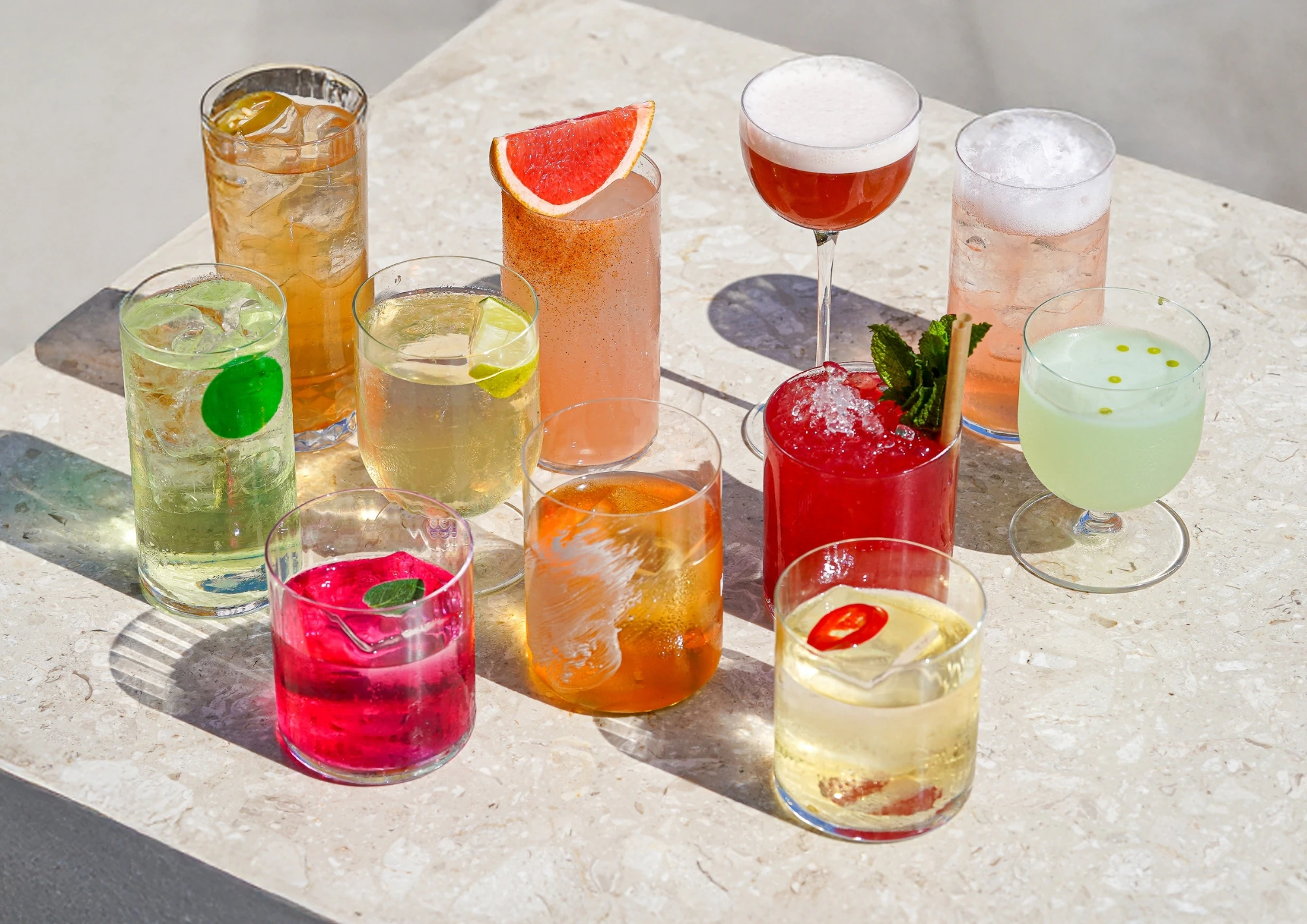
Long & refreshing
Tall glass, plenty of ice, citrus, herbs or bubbles. Thirst-quenching, with discreet alcohol — the best entry point when in doubt.

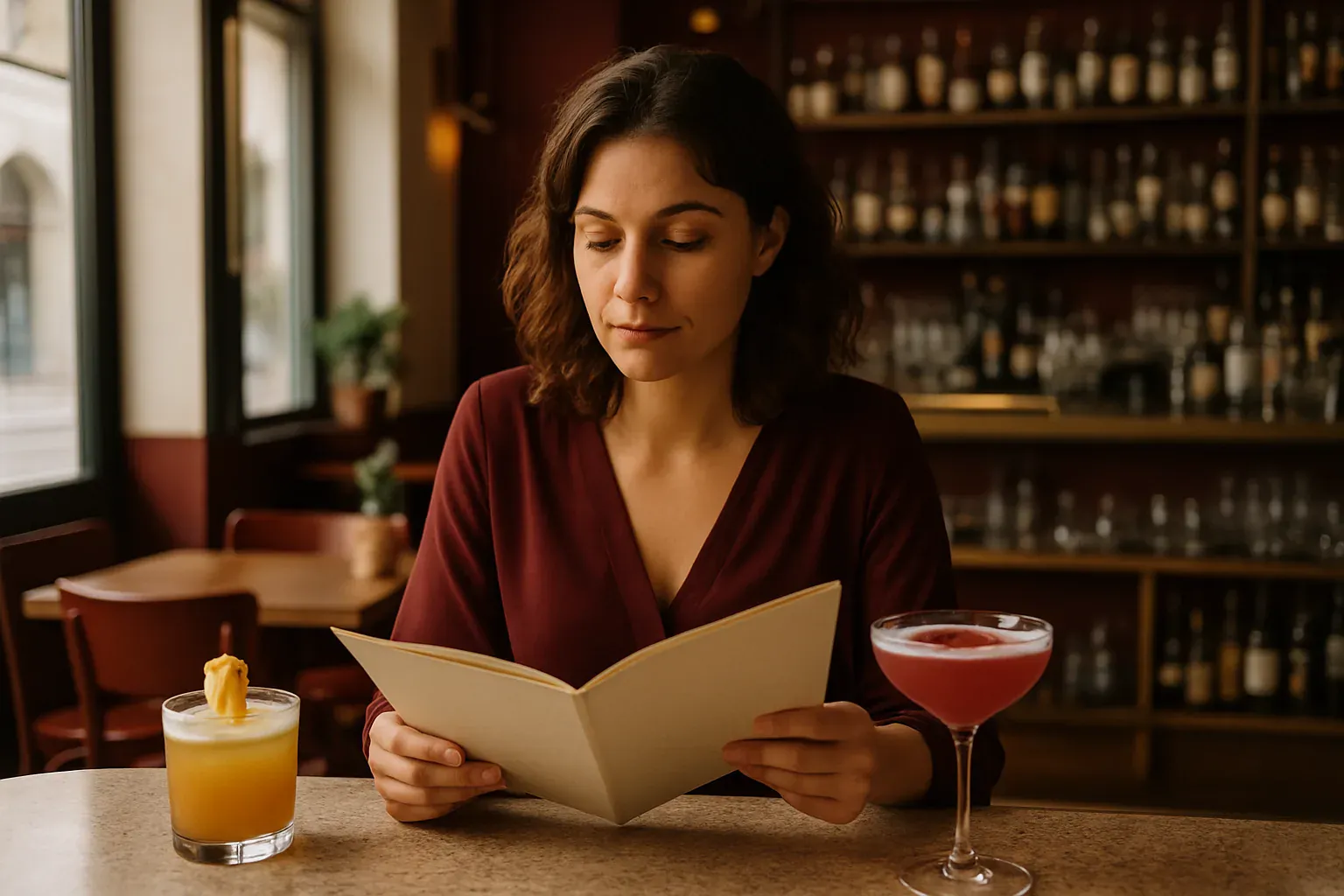
Twenty names on a menu, three minutes to decide. Here is the reading grid we hand our guests every night from behind the counter.
In short
Start from your own taste, not from the menu: say whether you prefer tart, sweet or bitter, and whether you want a light or a strong glass.
Learn to spot the families on any list — long and refreshing, short and spirit-forward, bitter apéritifs — and any menu becomes readable in ten seconds.
Judge the bar before the menu: a deep back bar, fresh fruit, herbs, clean ice and a seasonal list are the best quality signals.
Then talk to the bartender: one ingredient you like, one you refuse, and the moment of the evening are enough to get a glass made for you.
The menu vertigo
Twenty poetic names, unfamiliar ingredients and three minutes to decide: the problem is rarely too much choice, it is the lack of a reading grid.
Four or five markers are enough to choose well almost anywhere — a question about your taste, a little vocabulary, a glance at the bottles and one sentence to the bartender.
The starting point
A cocktail is an assembly of flavours you already know. If you like fresh grapefruit, you will like citrus long drinks; if you like strong coffee, bitterness will not scare you.
Situate yourself on three axes — acidity, sugar, bitterness — plus one more: strength. Then say it in one sentence, such as “bright and tart, not too sweet, not too strong”.
And do not let one bad experience close a door: a badly poured, lukewarm gin and tonic says nothing about gin itself.
The manual
A “sour” balances spirit, citrus and sugar: bright and accessible. A “spritz” or “fizz” adds bubbles: lighter and longer. A “highball” lengthens a spirit with soda over plenty of ice: the most refreshing category of all.
An “old fashioned” or any stirred drink arrives short, with one big cube and no fruit juice: the spirit leads, and you sip it slowly.
Watch for “house syrup” or “house infusion” — good signs. Be wary of purely poetic menus that list no ingredients at all.
The telltale sign
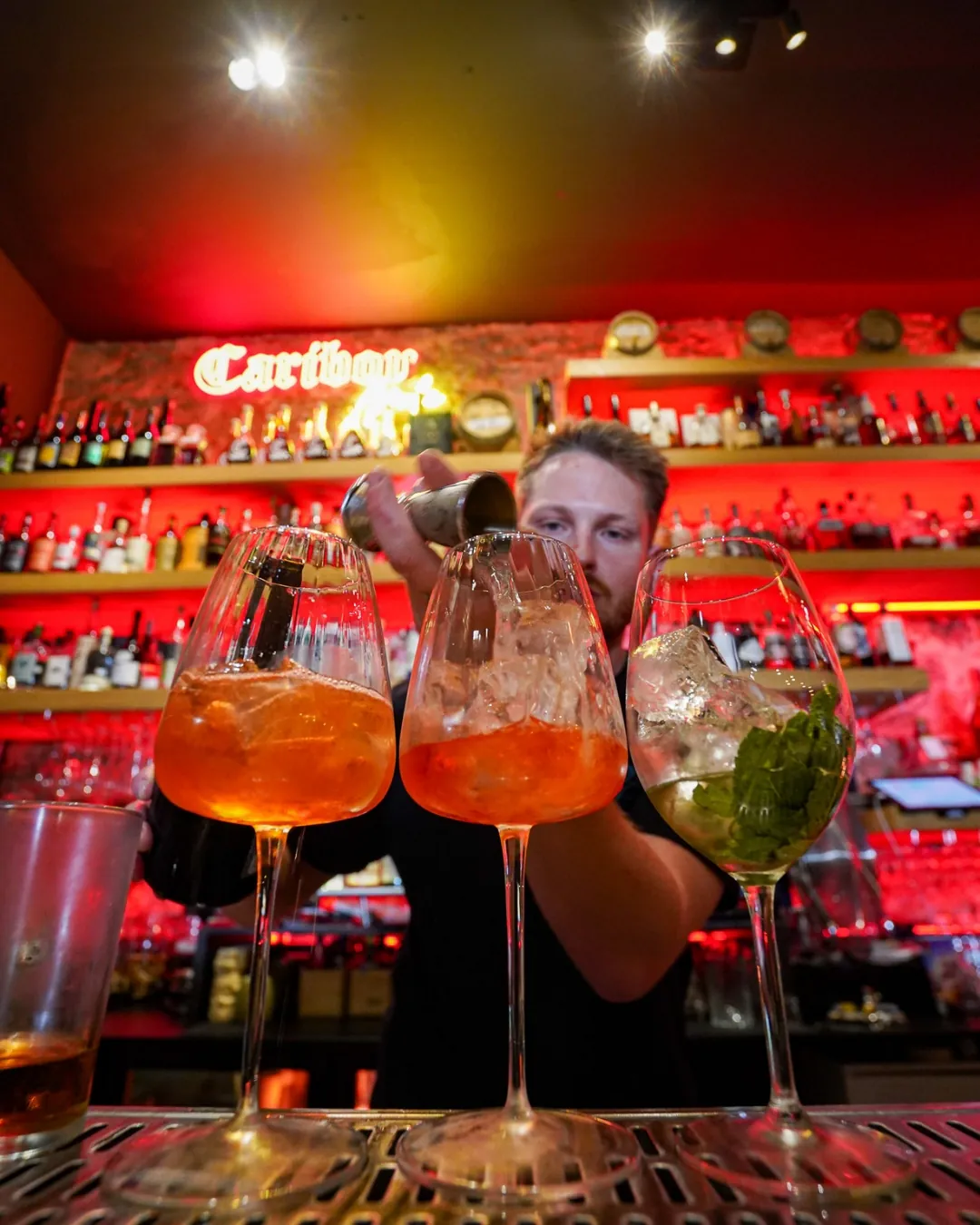
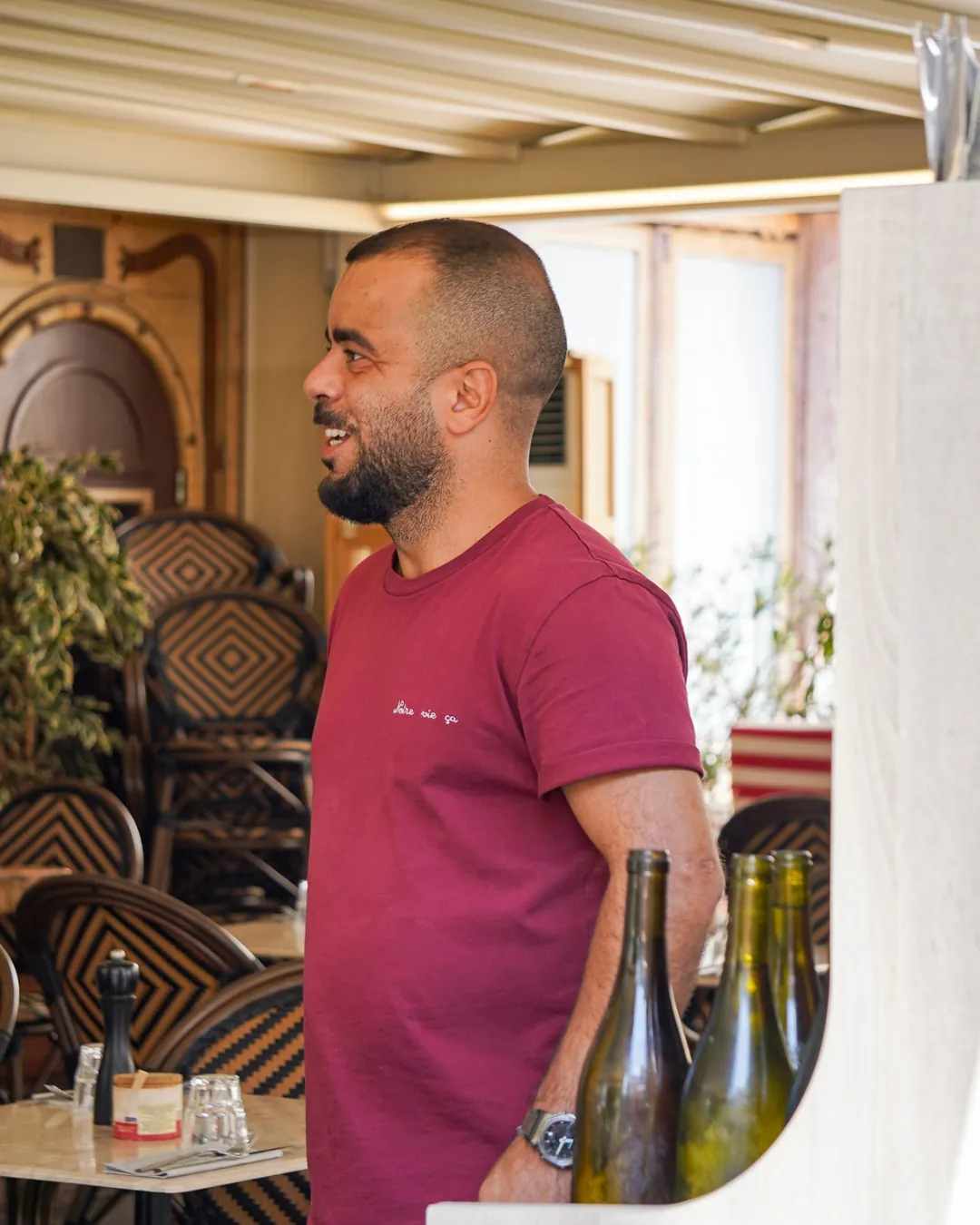
The back bar tells you everything: depth of range, bottles that visibly get used, house-labelled syrups.
Then look at the bench — fresh fruit, herbs cut the same day — and at the ice. Clean, dense ice is worth every speech; grainy ice dilutes the drink before you taste it.
The third signal is human: a bartender who looks up, asks your taste and adjusts. That consistency is what sets a real house apart.
The reading grid
Nearly every menu falls into three families. Spot yours and the choice narrows to two or three lines.
Tall glass, plenty of ice, citrus, herbs or bubbles. Thirst-quenching, with discreet alcohol — the best entry point when in doubt.
Small glass, one big cube, few ingredients. The spirit leads and the texture is round: best with dinner or late in the evening.
Built around a bitter or a vermouth, often lengthened with bubbles. They open the appetite and suit a first drink perfectly.
The question of timing
The same glass does not serve the same purpose at 6 pm and at midnight. For a first drink, go light: long, fresh, slightly bitter or tart.
Later, you can build up — aged spirits, roasted or spiced notes, short glasses to sip. At the very end, return to a well-made classic, and slip in a glass of water.
The calendar
A serious bar changes its list several times a year. Ordering the seasonal creation is the most reliable shortcut there is — it is the glass the team is proudest of.
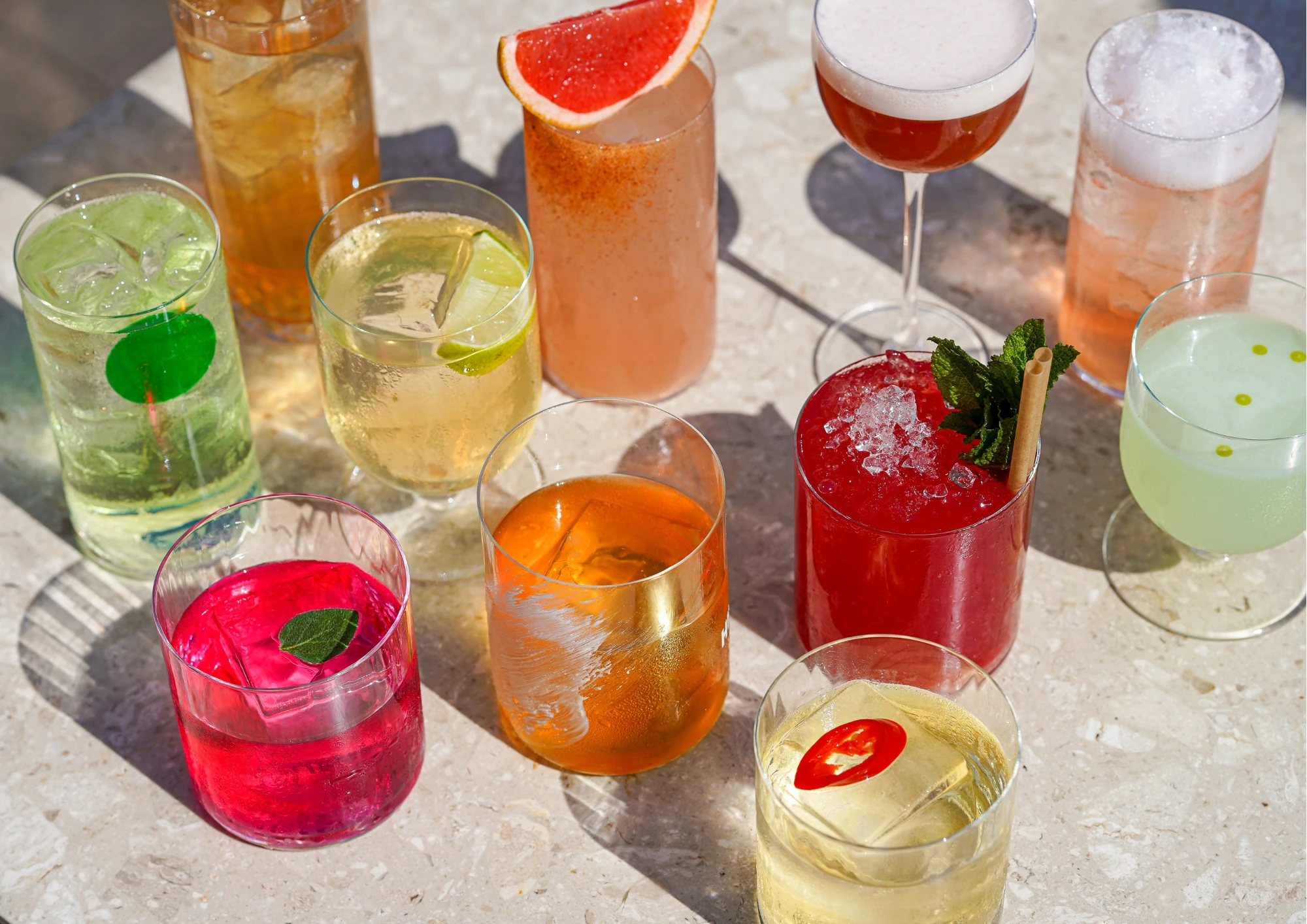
Citrus, fresh herbs, berries, cucumber: long, very fresh, lightly sweetened drinks made for the terrace.
Cooked fruit, pear, fig, gentle spice and smoke. Rounder textures without losing freshness.
Aged spirits, candied citrus, cinnamon, cocoa, coffee: shorter, enveloping glasses to sip at the counter.
The right question
The best tool is the person behind the counter — give them three pieces of information.
One ingredient you like
Lemon, ginger, basil, coffee, aged rum: one concrete word beats “surprise me”.
One you refuse
Too sweet, no aniseed, no tequila: saying what you do not want avoids most disappointments.
Timing and intensity
“First drink, light” or “after dinner, something bold” turns the same menu into two different answers.
Enjoying the night
Choosing a cocktail also means choosing a rhythm. A few simple adjustments make the difference between a pleasant evening and one you regret.
Alcohol-free has come a long way: a good mocktail seeks the same structure as a classic, with bitterness, acidity and length.
Alternate: a glass of water between cocktails resets your palate and changes the end of the night.
Pair it: a few savoury bites or a sharing board keep the pace without spoiling dinner.
Ask for an alcohol-free creation rather than a soft drink — the answer will be far more interesting.
Speak up: if the first glass is not right, say so. A good counter would rather fix it than let you finish out of politeness.
Plan your way home before ordering the last drink. That rule is not negotiable.
Our counter
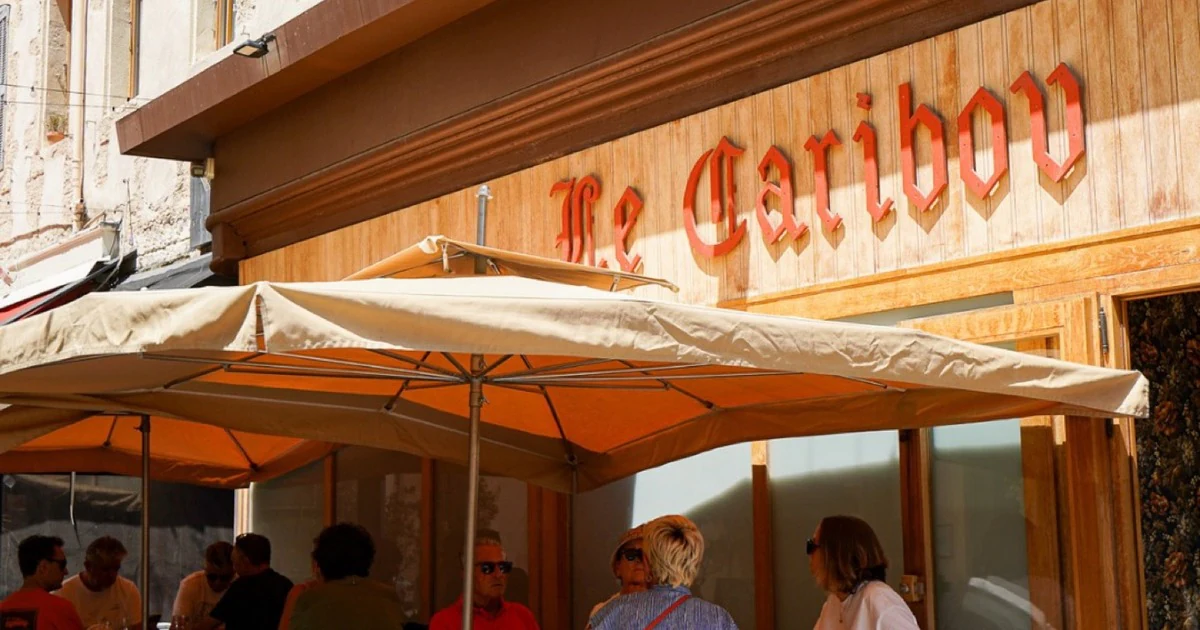
This guide is written from one precise place: our counter on place Thiars, on the Vieux-Port of Marseille, where we ask your taste before handing over a menu.
Our bartenders build a seasonal list with fresh produce and house syrups. Tell us bright or round, with or without alcohol, first drink or last: we handle the rest.
Good to know
Start from your taste, not the menu. Give the bartender one ingredient you like, one you refuse, and whether you want something light or strong. That is enough for a well-matched suggestion.
A long, fresh glass: citrus, herbs or bubbles, lightly sweetened and low in alcohol. Save short, spirit-forward drinks for the end of dinner or the end of the night.
A well-stocked back bar, fresh fruit and herbs, house syrups and clean, dense ice — plus a bartender who guides you and a menu that changes with the seasons.
A sour balances spirit, citrus and sugar. A highball lengthens a spirit with soda over ice, very refreshing. A spritz adds bubbles to a bitter or vermouth: light and ideal at the apéro.
A classic gives you a known benchmark; a house creation shows the team’s style and the produce of the moment. If unsure, ask for the seasonal creation.
Yes. A good mocktail seeks the same structure as a classic — bitterness, acidity, length — through infusions, house syrups and fresh citrus.
Absolutely, and you should. Less sweet, more tart, lighter on alcohol or without a given ingredient: an attentive counter will gladly adjust.
Go further
Find all our guides, addresses and Marseille behind-the-scenes in the restaurant journal.
Book your table at Le Caribou, place Thiars on Marseille’s Vieux-Port — tell us your taste, our bartenders handle the glass.