Top — the display
Rare bottles and large formats, rarely reached during service. They tell the taste of the house and give the room its depth.

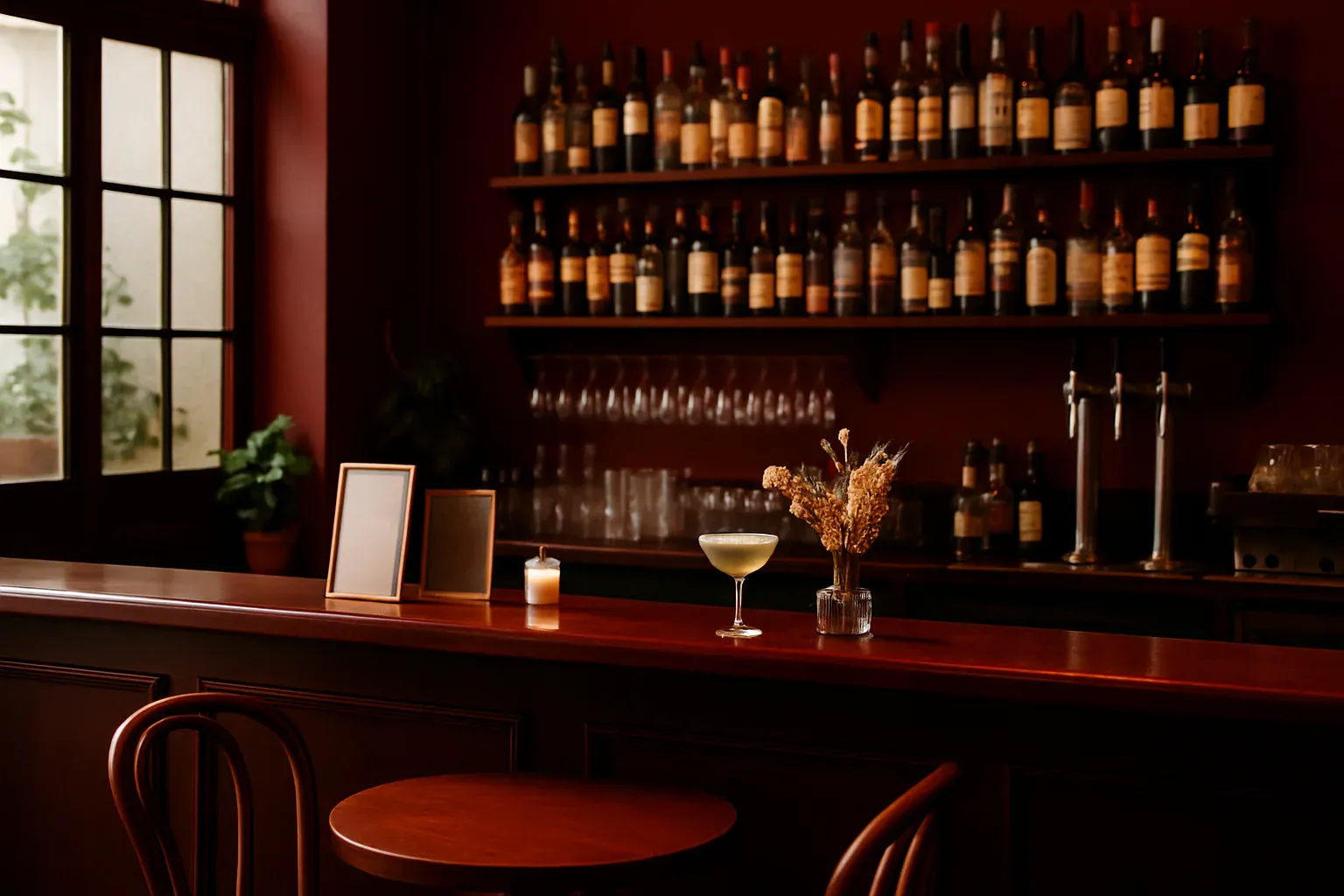
It is the wall of bottles everyone looks at and nobody can name. Here is what a back bar really is, what it does — and what it tells you about the bar you just sat down in.
In short
A back bar is everything behind a bar counter: the shelf of bottles, the cabinet holding it, the fridges and the bartender’s working station. Storage, workshop and shop window at once.
It differs from the front bar, the customer-facing counter top where you rest your glass. The front bar welcomes; the back bar produces.
It reads in three levels: display bottles up high, working bottles at hand height, and the cold technical zone below — ice, house syrups, fresh juice and herbs.
It is the most reliable quality signal in any cocktail bar: depth of range, genuinely opened bottles, labelled house preparations and fresh fruit say more than any menu.
The definition
A back bar is everything behind the counter: the shelf of bottles facing the room, the cabinet beneath it, the built-in fridges, the ice, the sink and the bench where drinks are built. It is not only the display — it is the whole working post.
Unlike a kitchen, this workshop is fully visible. It must be efficient for the person working behind it and beautiful for the person watching from the stool.
The shortest way to put it: the back bar is the bartender’s library. The spirits, the house preparations and the fresh produce are the vocabulary; the cocktails are the sentences.
A little history
The word comes from 19th-century American saloons and hotels, where bar furniture was sold in pairs: the front bar facing the room and the back bar standing against the wall behind it.
Those cabinets were cabinet-making pieces, with a large central mirror that widened narrow rooms, bounced lamplight onto the bottles and let the bartender watch the room while working with their back to it.
Today “my back bar” also means a bartender’s selection and identity — an agave-led back bar, for instance, announces a menu built around tequila and mezcal.
Behind the scenes
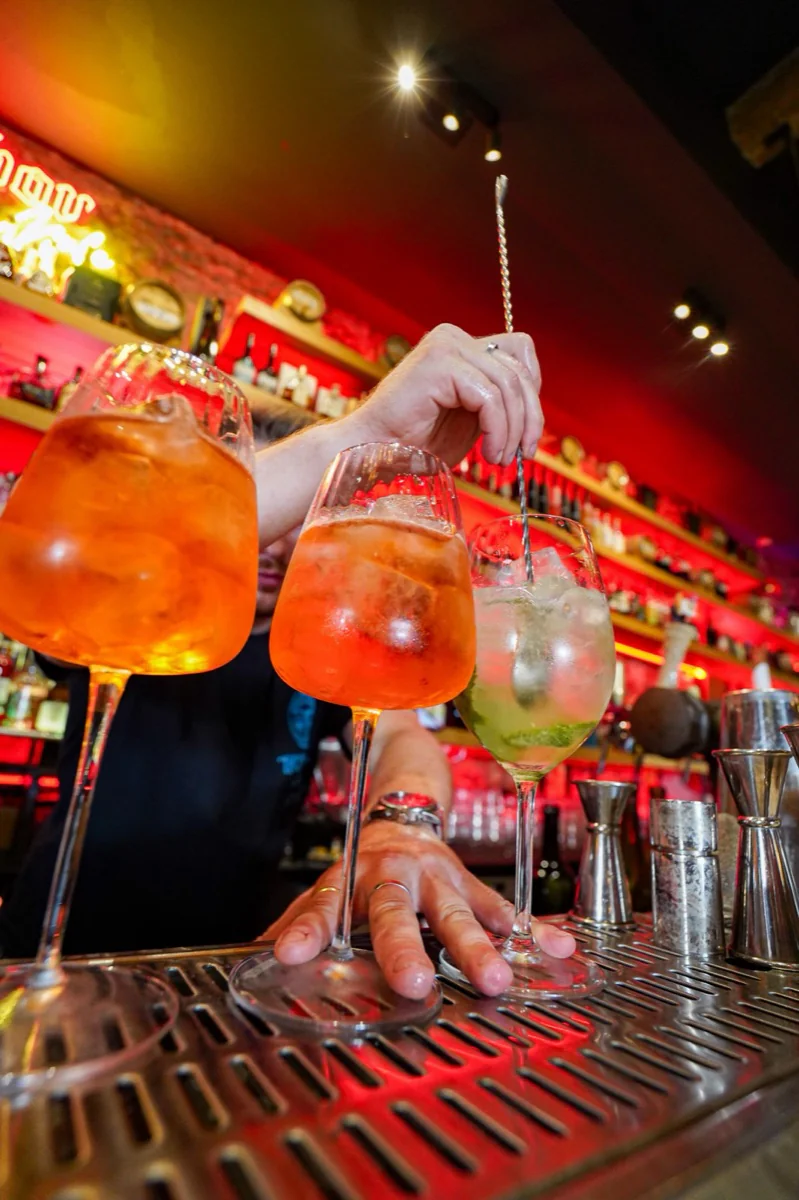
Seen from the front, a back bar looks like a bottle collection. Seen from behind, it is a compact production line: lit display shelves above, and a technical zone below that does the real work.
That zone holds under-counter fridges for opened vermouths and fresh juice, the ice machine or bin, a sink, speed rails of everyday bottles, and the bench with shakers, mixing glasses, spoons and strainers.
Add the house preparations — labelled and dated syrups, infusions, reductions — and the living produce: citrus, seasonal fruit and herbs within immediate reach. One rule governs it all: the most frequent gesture must be the shortest.
The classic mix-up
The front bar faces you: the counter top, the elbow rail, the foot rail, the stools. The back bar faces the bartender and carries stock, tools, cold storage and the display.
Between them sits the station — the sixty to eighty centimetres holding ice, speed rails and building space. That is where cocktails are actually made.
Why it matters to you: a marble front bar with a poor shelf means money went into decor. A modest counter with a well-kept shelf almost always means a better drink.
The reading grid
Almost every back bar is organised vertically, from decorative at the top to technical at the bottom. Spot that logic and you can read any counter at a glance.
Rare bottles and large formats, rarely reached during service. They tell the taste of the house and give the room its depth.
Eye and hand height: gins, rums, agaves, bitters and vermouths grabbed ten times a service. Opened bottles, labels turned out, no wasted movement.
Cold storage, ice, house syrups, juice pressed the same day, cut herbs. Invisible from the room, decisive in the glass.
The telltale sign
The back bar is the one place a bar cannot fake for long. Check the depth first: several references per spirit family means a working vocabulary, not a supplier’s list.
Then check bottle levels. Full, perfectly aligned bottles suggest decor; half-empty, mismatched bottles with pourers suggest a shelf that genuinely serves.
Finally look for house-made traces — hand-labelled syrups, dated flasks, herbs in water — and at the ice. Clean, dense ice is the clearest quality signal of all.
The contents
A back bar is not a wall of alcohol. Three ingredient families must be present for a menu to stand up; remove one and the bar slips into ready-made mixes.
Rums, gins, agaves, whiskies, bitters and vermouths picked for what they bring to the glass rather than for the label.
Syrups, infusions, reductions and macerations made on site — the invisible work that gives a menu its signature.
Citrus pressed to order, seasonal fruit, herbs cut the same morning: the living matter of the counter.
Invisible ergonomics
Behind the aesthetics, a back bar is a working post ruled by three principles.
The shortest gesture
The most-served bottles sit at hand height with pourers on. Ten uses a night must never cost a step.
A place for everything
Each bottle returns to its spot, label out. In a rush the bartender grabs blind: stable order means speed and no dosing errors.
The cold line
Ice, juice, vermouths and herbs stay grouped in the chilled lower zone. Cold never moves — the bartender comes to it.
The daily routine
What you see at night is the result of an afternoon of preparation: citrus pressed, syrups cooked and filtered, flasks dated, ice cut, station restocked.
Then comes rotation. Opened vermouths last weeks, fresh juice a day, house syrups a few days — which is why short menus are often better than endless ones.
Daily mise en place: pressed citrus, cooked syrups, dated labels, station rebuilt before the first guest.
Rotation of opened bottles, so nothing oxidised ever reaches a glass.
Nightly cleaning of pourers and ice bins — the most sensitive hygiene point of any counter.
Seasonal evolution: fruit changes, preparations follow, part of the menu is rewritten several times a year.
Our counter
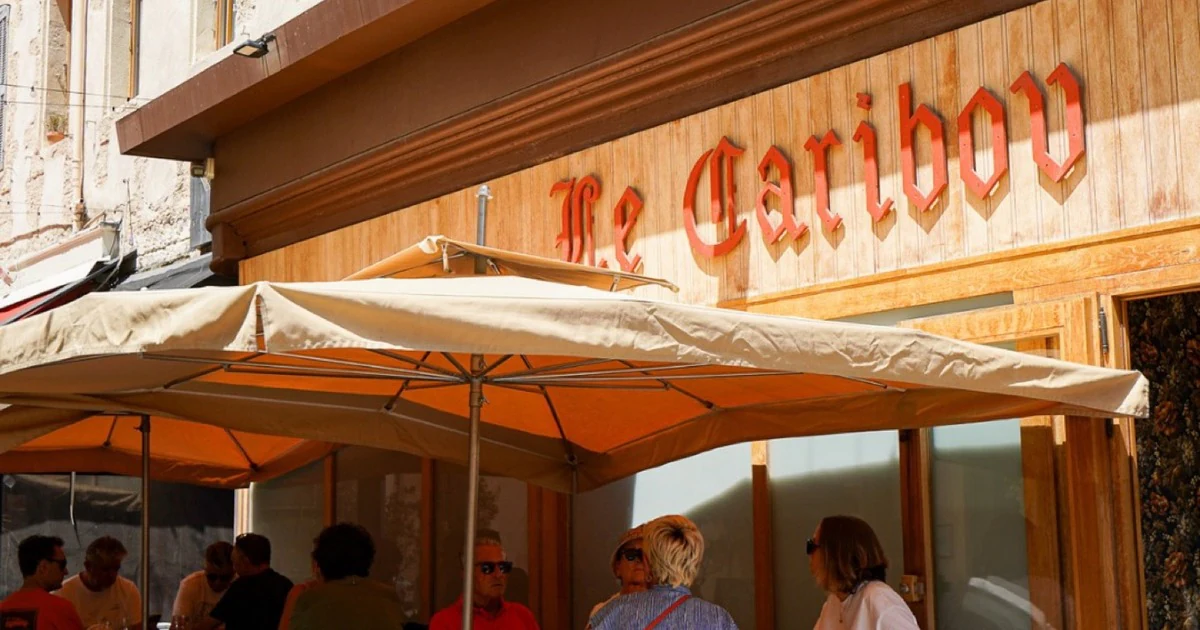
All of this can be watched in one precise place: our counter on place Thiars, Marseille. The shelf is no backdrop — it is the workshop behind our seasonal creations and revisited classics, with hand-picked spirits, house syrups and citrus pressed to order.
The best seat is the stool facing the station. Sit at the counter, tell us what you like — bright or round, with or without alcohol — and watch the shelf at work. That is the best definition we can offer.
Good to know
The back bar is everything behind a bar counter: the shelf of bottles, the cabinet, the fridges, the ice and the bartender’s bench. Storage, workshop and shop window at once.
The front bar faces the customer — the counter top where you rest your glass. The back bar faces the bartender and holds stock, cold storage, tools and the display. One welcomes, the other produces.
It is a legacy of 19th-century back bars: the mirror widens narrow rooms, bounces light onto the bottles and lets the bartender watch the room while working with their back to it.
Look at the depth of the range, at bottle levels — opened bottles prove they are used — at hand-labelled house syrups, fresh fruit and herbs, and at the ice: clean, dense cubes are the clearest signal.
Usually in three levels: display bottles up high, working bottles at hand height, and a cold technical zone below with ice, juice, syrups and herbs. The rule: the most frequent gesture must be the shortest.
House syrups, infusions and reductions, juice pressed the same day, seasonal fruit and fresh herbs, plus the equipment: shakers, mixing glasses, strainers, pourers, ice and under-counter fridges.
Yes, and it is the best seat. At Le Caribou, place Thiars on Marseille’s Vieux-Port, you can sit at the counter just for a drink and watch the bartender work in front of the shelf.
Go further
Find all our guides, addresses and Marseille behind-the-scenes in the restaurant journal.
Book your table at Le Caribou, place Thiars on Marseille’s Vieux-Port — sit at the counter and watch the shelf at work.